When most travelers picture Nepal, their minds immediately jump to white peak horizons, fluttering prayer flags on high mountain passes, and dusty trekking boots. But long before the first mountaineers ever set eyes on the Himalayas, a rich, vibrant civili zation was blooming in the bowl of the Kathmandu Valley. This ring of green hills surrounding Kathmandu, Patan, and Bhaktapur has served as a cultural crossroads for thousands of years, where Hindu rituals and Buddhist traditions blend seamlessly into daily urban life.
Stepping into the valley isn’t just about taking photos of old brick buildings; it’s about stepping into a living, breathing museum. The ancient alleyways here still echo with the sound of brass hammers, the scent of burning incense, and the cheerful chatter of local communities gathering in brick courtyards. If you want to experience the true heart of Nepal before or after your mountain trek, our hand-crafted Kathmandu Valley Cultural Packages offer an authentic look into the soul of this incredible region.
Here are seven immersive cultural experiences in the Kathmandu Valley that will show you a side of Nepal that goes far beyond the mountain peaks.
1. Getting Lost in the Living Museum of Bhaktapur
If Kathmandu is a bustling metropolis and Patan is the city of fine arts, Bhaktapur is a town frozen in time. Known historically as Bhadgaon (the City of Devotees), walking through the red-brick lanes of Bhaktapur feels like stepping straight into the 15th century. Because motor vehicles are restricted in the historic core, the air is quiet, carrying only the sounds of temple bells and local weavers at work.
As you wander through Bhaktapur Durmar Square, take time to admire the intricate woodcarvings on the 55-Window Palace and the soaring, five-tiered roofline of Nyatapola Temple—the tallest traditional pagoda in Nepal. But the real magic lies in the residential side streets. Watch locals dry colorful grains in the open public squares, spin clay on heavy wooden wheels, and gather around ancient stone water spouts that have fed the city for centuries.
💡 Local Tip: Never leave Bhaktapur without tasting "Juju Dhau" (the King of Yogurts). Served in traditional unglazed clay pots, this sweet, thick curd is infused with spice like cardamom, and it is unlike any yogurt you’ll taste anywhere else in the world.
2. Experiencing the Evening Aarti Ceremony at Pashupatinath
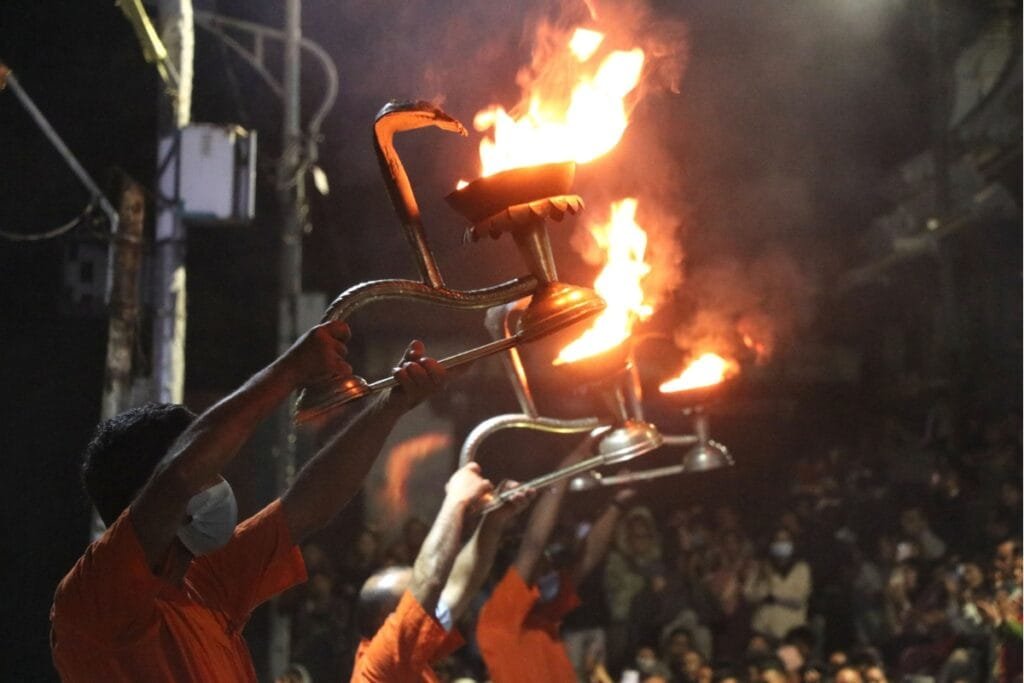
Standing along the banks of the sacred Bagmati River, Pashupatinath is one of the most significant Hindu temple complexes in the world. While the main golden-roofed temple is reserved for practicing Hindus, the spiritual energy of the entire surrounding forest and riverbank embraces every visitor who walks through the complex grounds.
As the sun sets, head across the stone bridge to the eastern bank of the river to witness the evening Sandhya Aarti. Hindu priests dressed in traditional robes perform a rhythmic, hypnotic ritual using large copper oil lamps, brass bells, and burning incense, accompanied by live devotional singing and the beating of drums. Looking across the river at the glowing flames reflected on the water, surrounded by sadhus (holy men) and local devotees, you experience a moment of deep spiritual reverence that stays with you long after you leave Nepal.
3. Spinning Prayer Wheels at the Ancient Stupa of Swayambhunath
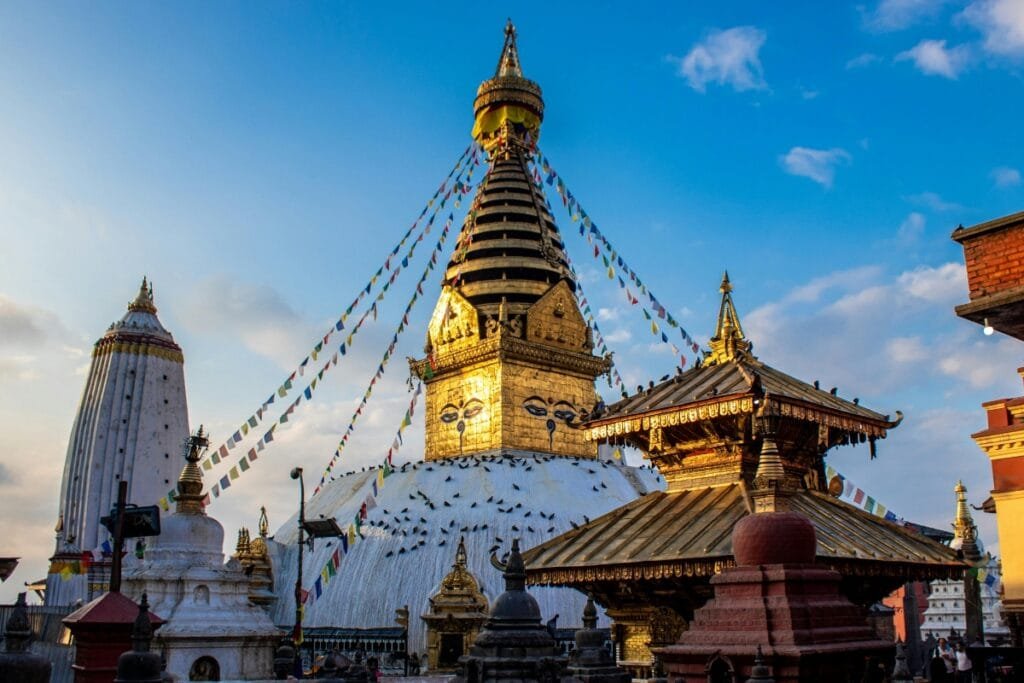
Perched high on a forested hill overlooking the entire valley floor, Swayambhunath—often called the Monkey Temple—is one of the oldest and most sacred Buddhist sites in Nepal. According to local mythology, the entire Kathmandu Valley was once a vast lake, and Swayambhunath sprang up spontaneously from a lotus flower that bloomed in the middle of the waters.
Reaching the top requires climbing a steep stone staircase of 365 steps, shaded by tall trees and flanked by playful holy monkeys. Once at the summit, you are greeted by the iconic painted eyes of the Buddha looking out over the valley in four directions. Walk clockwise around the massive white dome, spinning the copper prayer wheels as you go alongside Tibetan pilgrims, monks in maroon robes, and local families offering morning prayers. The view of the morning mist lifting off the valley city from the stupa plaza is easily one of the finest sights in Central Nepal.
4. Tasting Your Way Through an Authentic Newari Feast
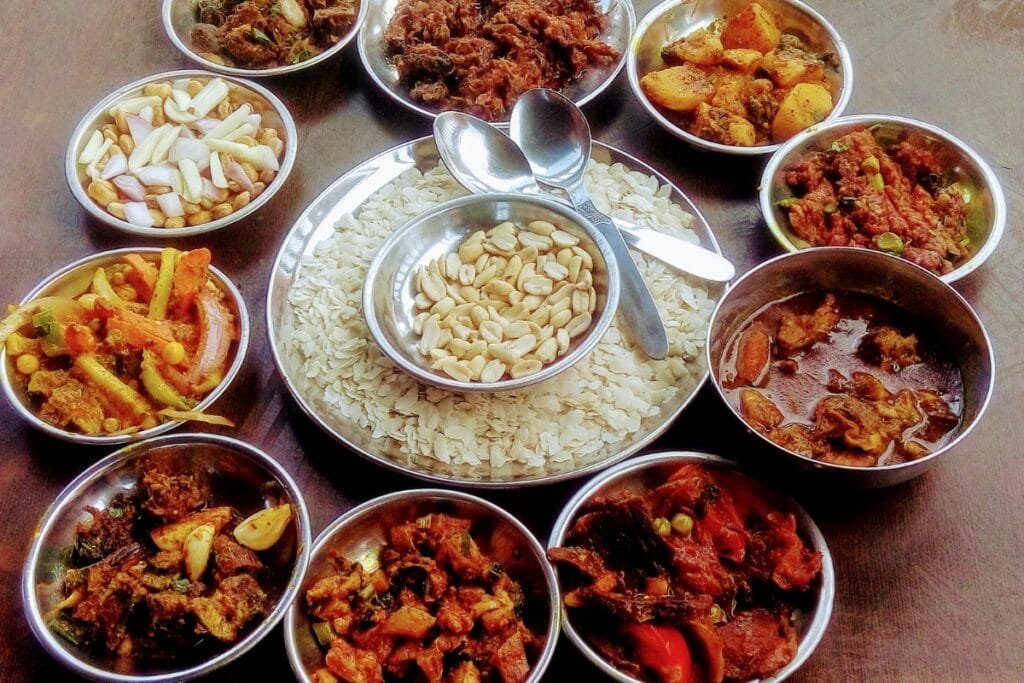
You cannot truly understand the culture of the Kathmandu Valley without sitting down for a traditional Newari meal. The Newars are the indigenous inhabitants of the valley, and their culinary heritage is one of the most complex, flavorful, and diverse food traditions in South Asia. Unlike standard daily staples, a traditional Newari feast (Lpoma or Samay Baji) is a rich celebration of locally farmed ingredients, buffalo meat, fermented vegetables, and aromatic spices.
A classic platter is served on woven laptap leaves and features beaten flat rice (chiura), spiced grilled buffalo meat (choila), black-eyed beans, roasted soy beans, marinated ginger and garlic, and local green vegetables. If you are feeling adventurous, pair your meal with a small brass bowl of Aila—a potent, home-distilled rice liquor poured with expert precision from a spout held high above your cup. Sitting on woven straw mats in a restored heritage home while sharing these small plates is an unforgettable way to connect with local hospitality.
5. Getting Your Hands Dirty in Bhaktapur’s Pottery Square
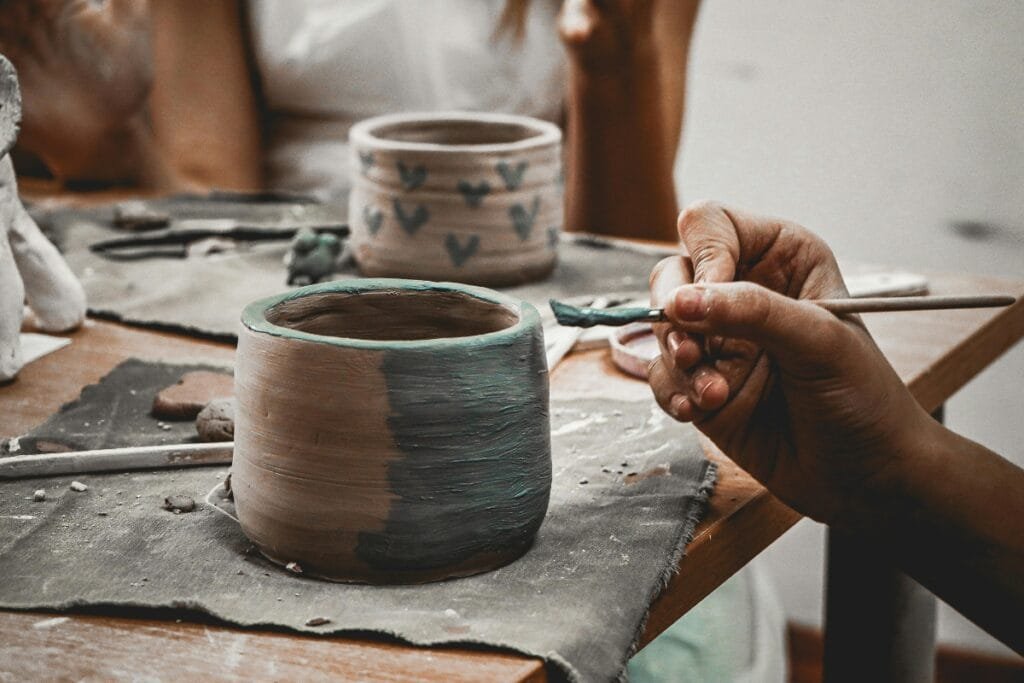
In an era dominated by mass-produced plastic and factory goods, the ancient craft of hand-thrown pottery is still alive and thriving in the heart of Bhaktapur’s Bolachhen (Pottery Square). For generations, families belonging to the Kumhale caste have used the dark, fertile clay dug from the valley outskirts to fashion everyday household items, oil lamps, and decorative pots.
Walking into the wide open plaza, you will see thousands of newly formed clay pots drying in rows under the warm Himalayan sun. Local master potters sit over heavy, spinning wooden wheels, shaping raw lumps of clay into smooth, elegant vessels using nothing more than their hands and a small wooden paddle. Joining a local artisan for a hands-on pottery workshop allows you to sit at the wheel, feel the cool clay beneath your fingers, and learn the delicate balance required to spin your own souvenir pot to take home.
6. Discovering Fine Art & Hidden Courtyards in Patan
While Kathmandu is energetic and commercial, Patan (historically known as Lalitpur, the City of Fine Arts) is refined, artistic, and deeply contemplative. Patan has been the artistic capital of Nepal for over a millennium, famous worldwide for producing the finest metal statues, thangka paintings, and intricate woodcarvings found across the Himalayan region.
The real joy of Patan lies in leaving the main roads and ducking through the low, stone-framed doorways (bahals) that lead off the street. Opening up behind these tiny entrances are quiet, sunlit residential courtyards containing centuries-old shrines, hidden stupas, and small artisan workshops. Step inside the Patan Museum—housed in a meticulously restored royal palace—to view one of the best collections of sacred Asian art in the world, before sitting for a quiet herbal tea in the palace garden cafe.
7. Seeking Blessings at the Quiet Forest Stupa of Boudhanath
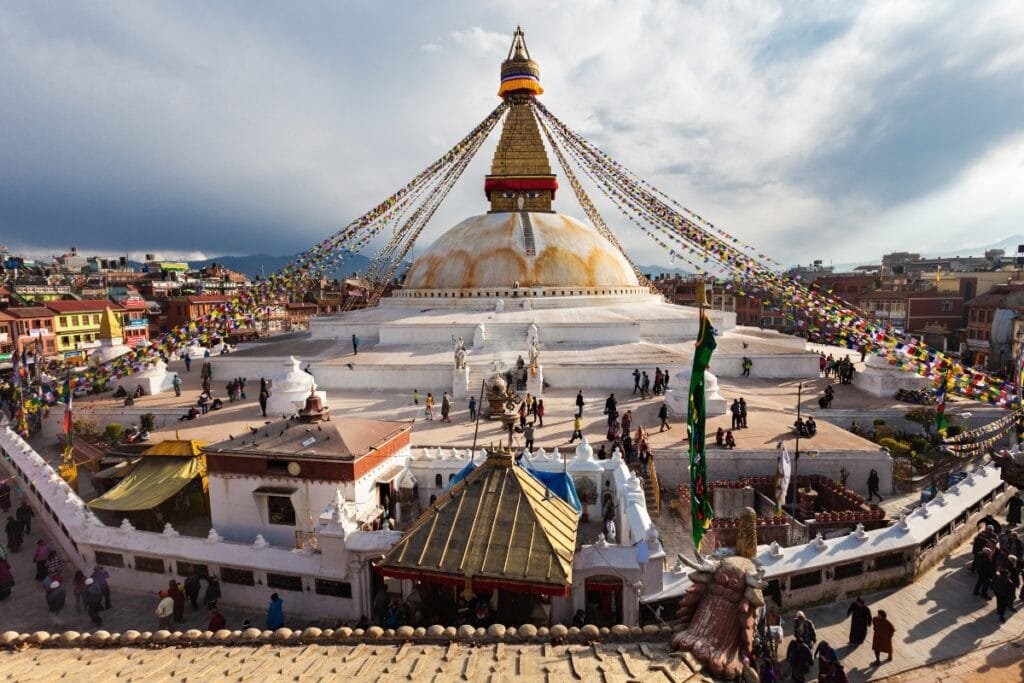
While Swayambhunath sits high on a hill, Boudhanath rises like a massive, glowing white mandala right in the middle of a bustling northeastern neighborhood. As one of the largest spherical stupas in the world, Boudhanath has served as the spiritual and commercial hub for Tibetan traders, Himalayan pilgrims, and monks travelling across the high mountain passes for centuries.
The best time to experience Boudhanath is in the late afternoon as the sun begins to dip. The surrounding plaza comes alive during the evening kora, when hundreds of locals walk clockwise around the massive whitewashed base. The air grows thick with the scent of burning butter lamps and incense, while the rhythmic low hum of the chant “Om Mani Padme Hum” fills the open space. Sit at a rooftop terrace cafe overlooking the plaza, sip on a warm cup of salted butter tea, and watch the prayer flags flutter against the twilight sky.
🧳 Planning Your Cultural Journey with Frox Holidays
| Travel Category | What You Need to Know |
| Best Time for Culture | Autumn (Sept–Nov) during major festivals like Dashain & Tihar, or Spring (Mar–May) for clear days and street processions. |
| Getting Around | Private air-conditioned vehicles are best for switching between cities; walking on foot is required inside heritage zones. |
| Recommended Duration | Set aside 3 full days to properly explore Kathmandu, Patan, and Bhaktapur without rushing. |
🏔️ Experience the Living Heritage of Nepal
Beyond the towering snowy peaks and adventure trails lies a country rich in human warmth, ancient artistry, and timeless spiritual traditions. At Frox Holidays, we believe that a truly great journey through Nepal bridges the gap between natural wonders and cultural immersion. Whether you want to master pottery in Bhaktapur, explore hidden Buddhist monasteries, or taste authentic local cuisine with a neighborhood guide, our team is here to craft a smooth, authentic, and unforgettable holiday for you.