There is a noticeable shift occurring in how companies plan their meetings. Boardrooms are no longer confined to glass towers and city hotels. Decision-makers are seeking spaces that inspire clarity, encourage genuine conversations, and disrupt routine thinking. That is where Chitwan becomes relevant.
Set in the heart of Chitwan National Park, this destination offers a completely different environment for corporate gatherings. Instead of traffic noise and tightly scheduled agendas, participants experience open landscapes, fresh air, and a slower rhythm that allows ideas to flow more naturally. It is not merely about changing the location; rather, it concerns transforming how individuals engage during meetings.
A Different Kind of Meeting Atmosphere
When you host a meeting in Chitwan, the energy shifts almost immediately. People are more present. There are fewer distractions, fewer interruptions, and more genuine interaction. Conversations tend to go deeper because the environment encourages it. Sitting in a meeting hall surrounded by greenery, with the sound of birds instead of phones, creates a subtle but powerful impact on focus and productivity.
Unlike traditional corporate setups, where schedules feel rigid and packed, Chitwan allows flexibility. Sessions can be structured, but they don’t feel forced. Teams often find themselves more open to discussion, more collaborative, and surprisingly more productive, which can lead to innovative solutions and a stronger team dynamic.
Where Business Meets Comfort
One common concern with offbeat destinations is whether they can support professional requirements. In Chitwan, that’s not an issue anymore. Premium properties like Meghauli Serai, Barahi Jungle Lodge, and Kasara Resort have redefined what a jungle stay looks like.
These lodges prioritize comfort while maintaining their connection to nature. Inside, you’ll find well-equipped conference halls, reliable internet, and modern AV systems that support everything from presentations to hybrid meetings. Outside, the setting remains calm, scenic, and immersive. This balance is what makes Chitwan ideal; it supports business needs without feeling like a typical business environment.
The Flow of a Typical Day
A day in Chitwan doesn’t feel rushed, yet it remains productive. Mornings usually begin with focused sessions, when the mind is fresh and the surroundings are calm. Large windows often let in natural light, which adds to the overall atmosphere of openness.
By midday, meetings ease into informal discussions over lunch, often with views of rivers or forest edges. Chitwan truly shines in the afternoons. Instead of long, draining sessions, teams step out for experiences like jeep safaris, canoe rides, or nature walks. These activities are not just recreational; they help reset the mind.
Evenings are relaxed but meaningful. Networking happens naturally around bonfires, during cultural performances, or over curated dining experiences. It’s during these moments that stronger connections are built, often more effectively than in formal meeting rooms.
Stronger Teams, Naturally
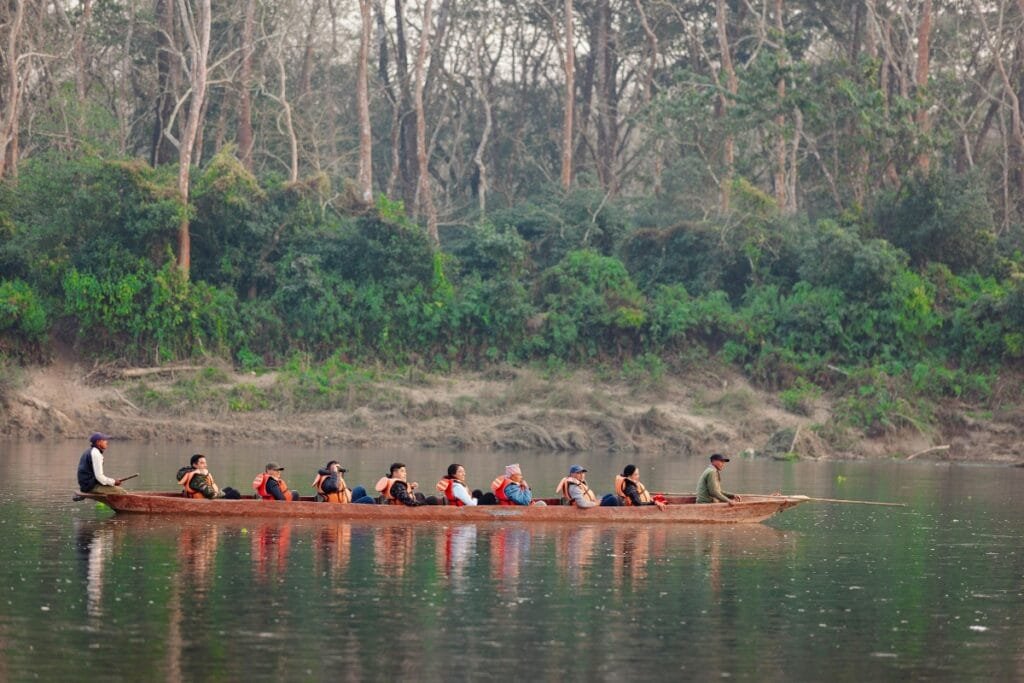
Team-building in Chitwan doesn’t need forced exercises or complicated setups. The environment itself does most of the work. Shared experiences—like spotting wildlife together or navigating a jungle trail—create genuine moments of connection.
There’s something about stepping out of a formal role and into a shared experience that changes group dynamics. Hierarchies soften, conversations become more natural, and teams begin to interact more openly. This is especially valuable for leadership retreats, where alignment and trust are key.
Adding local cultural elements, such as Tharu dance performances or village visits, also brings a deeper layer to the experience. It’s not just about bonding as a team, but also about understanding a different way of life, which often leaves a lasting impression.
Easy to Reach, Yet Feels Remote
One of Chitwan’s biggest strengths is accessibility. Despite feeling far removed from city life, it’s actually quite easy to reach. A short flight from Kathmandu to Bharatpur takes less than half an hour. From there, most resorts are just a short drive away.
For those who prefer road travel, the drive itself becomes part of the journey, passing through rivers, hills, and small towns. This balance easy access with a remote feel is what makes Chitwan practical for corporate planning.
When to Plan Your MICE Event
Timing plays an important role in shaping the experience. The months from October to March are generally the most comfortable, with clear skies and pleasant temperatures. This is when outdoor activities and meetings blend seamlessly.
Spring and early summer bring warmer days but also increase the chances of wildlife sightings, which can be a major highlight for visiting teams. Even the monsoon season has its charm, with lush greenery and a quieter atmosphere, making it suitable for more private and focused retreats.
Why Chitwan Works for Modern Corporate Retreats
Companies today are looking beyond conventional formats. They want retreats that deliver both results and experience. Chitwan fits perfectly into this shift. It offers a setting that encourages clarity without isolation, luxury without excess, and productivity without pressure.
Meetings here feel less like obligations and more like meaningful engagements. People leave not just with completed agendas but with fresh perspectives and stronger connections.
Final Thought
Hosting a corporate event in Chitwan is not about escaping work—it’s about improving how work happens. The environment allows teams to slow down just enough to think clearly, communicate better, and connect more deeply.
In a place like Chitwan, the most valuable outcomes often happen outside the meeting room—during a quiet walk, a shared safari, or a simple conversation under the open sky.